
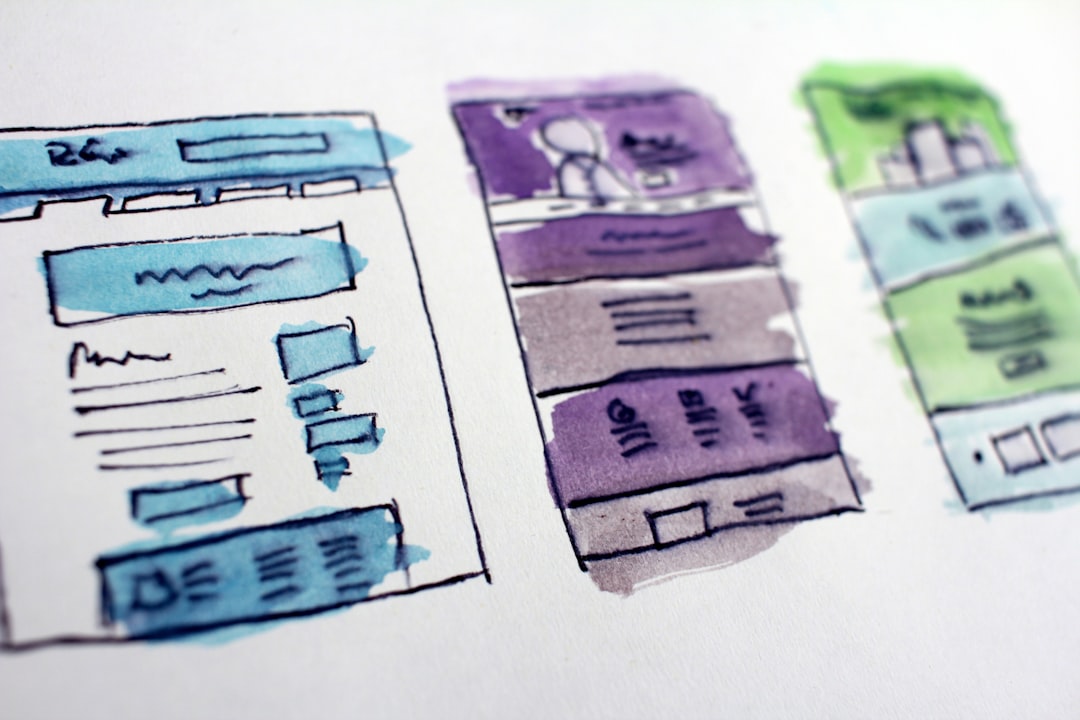
Web Development
WebsiteProduct – Your Ultimate Resource for Website Development and Online Success!
In the current digital era, maintaining a strong online presence is now necessary rather than…
In the current digital era, maintaining a strong online presence is now necessary rather than…

Revolutionizing Web Development: Unveiling Hostinger’s AI Web Builder In today’s digital age, the realm of…

Dev Mozilla stands as a beacon for web developers, offering a comprehensive suite of tools,…

In the ever-evolving landscape of web development, Python has emerged as a formidable player, captivating…

Websites dedicated to do-it-yourself enthusiasts have become indispensable resources for people wishing to start their…

Both individuals and businesses must have a strong online presence in the digital age. Traditional…

Getting the Most Out of Your Online Editor: A Complete Guide In the digital age,…

In the digital age, a web development portfolio serves as a crucial tool for professionals…

In today’s digital age, web development has emerged as a cornerstone of business success and…

In today’s digital age, the significance of website development cannot be overstated. A well-designed website…
Understanding the fundamental ideas that underlie this ever-evolving field is crucial when starting a web development journey. Fundamentally, web development entails building and managing websites.
The two primary categories of web development are usually front-end & back-end development. Back-end development handles the server-side, database management, & making sure everything functions properly behind the scenes, while front-end development concentrates on the visual elements of a website—the areas that users interact with directly. As you learn more about web development, you’ll come across a variety of tools and technologies that make website development easier.
The foundation of any web page is HTML (HyperText Markup Language), which gives your text and images organization and meaning. In addition to HTML, CSS (Cascading Style Sheets) lets you customize your web pages by letting you change fonts, colors, layout, and other elements. JavaScript makes your website more interactive by allowing for dynamic content updates without the need for page reloads. Since these fundamental technologies serve as the foundation for any web project you work on, it is imperative that you comprehend them. A crucial first step in the web development process is choosing the right programming languages and frameworks.
Frequently, the decision is based on your personal preferences, the skills you want to acquire, and the particular requirements of your project. Though frameworks like React, Angular, or Vue may also be of interest, JavaScript is essential for front-end development. J.S. These frameworks improve productivity & maintainability by offering pre-built tools & components, which expedite the development process.
Chapter Topic Metrics
1 Introduction to Web Development Number of pages: 10
2 HTML Basics Number of examples: 5
3 CSS Styling Number of exercises: 8
4 JavaScript Fundamentals Number of code snippets: 15
5 Responsive Web Design Number of case studies: 3
Languages like Python, Ruby, PHP, and Node.js are used on the back end. JS is a popular option. Every language has its advantages. For example, Python is renowned for being easy to learn and understand, which makes it a great option for novices.
frameworks such as Express or Django (for Python). JSON (for Node. js) can greatly accelerate your development process by providing powerful tools and libraries. As you investigate these choices, take into account not just the technical features but also the resources and community support offered by each language or framework.
You can get priceless support from a strong community as you face obstacles in life. Making sure your website is mobile-friendly and responsive is essential in today’s digital environment. Given that more people are visiting websites on smartphones and tablets, a responsive design makes sure that your website changes fluidly to fit various screen sizes and orientations. In addition to improving user experience, this flexibility can have a big impact on how well your website performs in search results. CSS media queries, which enable you to apply various styles depending on device characteristics, can be used to achieve responsive design.
Also, prioritizing important features and content can be achieved by adopting a mobile-first strategy, which involves designing for smaller screens before scaling up. Quick creation of responsive layouts can also be aided by programs like Foundation or Bootstrap. Keep in mind that improving images and cutting down on load times are essential elements of mobile optimization; websites that load slowly can irritate visitors & increase your bounce rate. Your top priority when creating web applications should be to incorporate performance and security best practices. Both user satisfaction and search engine visibility are increased by a well-performing website.
The speed of your website can be considerably increased by using strategies like reducing HTTP requests, optimizing images, and utilizing browser caching. Also, you can more effectively distribute your content across multiple geographic locations by utilizing Content Delivery Networks (CDNs). Equally important to web development is security. You need to safeguard your website against common vulnerabilities like cross-site scripting (XSS), SQL injection, & cross-site request forgery (CSRF). One essential step in protecting user-server data transmission is to implement HTTPS.
You can further strengthen your website against potential threats by using security headers and updating your software dependencies on a regular basis. You can build a strong foundation for your web applications by giving performance and security top priority. Front-end development combines technical expertise with creativity, enabling you to use code to make designs come to life. Learning front-end techniques entails knowing how to combine HTML, CSS, and JavaScript to create dynamic user interfaces. The Document Object Model (DOM), which depicts the structure of your web pages in a manner that JavaScript can modify, is one of the ideas you should become familiar with. You can improve your ability to create seamless user experiences by investigating sophisticated front-end techniques like async/await and asynchronous programming with Promises, in addition to core technologies.
When working with sophisticated applications that demand effective data handling, it can also be helpful to learn about state management libraries like Redux or MobX. As you hone your front-end abilities, think about creating small projects or participating in open-source projects; hands-on practice helps you retain what you’ve learned. A successful web development process depends on the design of the user interface (UI) & user experience (UX).
While user interface (UI) concentrates on a website’s visual components, like buttons, icons, & layout, user experience (UX) includes the whole user experience. Prioritizing usability and accessibility will help you create a UI/UX design that works for everyone. Understanding the requirements and preferences of your audience requires conducting user research.
Usability testing, interviews, and surveys can all be used to get input on your designs. Also, you can help users navigate your site intuitively by using design principles like hierarchy, consistency, and feedback. You can quickly prototype designs with the aid of programs like Figma or Adobe XD, which enable iterative testing and improvement prior to implementation. Applications can communicate with each other thanks to the useful tools known as APIs (Application Programming Interfaces).
As a web developer, you can easily integrate third-party services into your projects by using APIs to greatly improve their functionality. For example, you could use APIs to process payments, share content on social media, or retrieve data from outside sources like news feeds or weather data. It’s critical to comprehend how to properly handle responses and submit requests (GET, POST, PUT, & DELETE) when utilizing APIs. You can create APIs that are simple to use & maintain by becoming familiar with RESTful principles.
Also, looking into GraphQL as a REST substitute can offer greater flexibility in terms of data retrieval and querying. You can save development time & produce richer user experiences by skillfully utilizing APIs. Due to the constantly changing nature of the web development field, staying current in this quick-paced sector requires constant learning. Along with updates to pre-existing frameworks and languages, new technologies are constantly emerging. Consider taking courses that concentrate on new trends, participating in online forums, or reading industry blogs to stay up to date with these developments.
Making connections with other developers through conferences or meetups can also give you access to industry best practices and cutting-edge solutions. Participating in communities on websites such as Stack Overflow or GitHub enables you to exchange knowledge & gain insight from the experiences of others. You can position yourself as a proficient web developer prepared to take on any challenge by making a commitment to lifelong learning and actively seeking out new knowledge. In summary, developing web skills necessitates a combination of technical know-how, inventiveness, and a dedication to lifelong learning. Understanding the fundamentals, picking the appropriate tools, concentrating on user experience, and keeping up with market developments will prepare you to develop powerful web applications that successfully satisfy users’ needs.
Accept this journey with excitement; every project will improve your abilities and broaden your knowledge of this fascinating area.
Certainly! In the ever-evolving field of web development, staying updated with the latest trends and technologies is crucial for developers. One insightful article that delves into the current advancements in web development is available at fiverr. This article explores various emerging trends, tools, and best practices that are shaping the future of web development, providing valuable insights for both novice and experienced developers.
Web development refers to the process of building and maintaining websites. It involves tasks such as web design, web content development, client-side/server-side scripting, and network security configuration.
There are three main types of web development: front-end development, back-end development, and full-stack development. Front-end development focuses on the visual and interactive aspects of a website, while back-end development deals with the server-side functionality. Full-stack development involves working on both the front-end and back-end aspects of a website.
Some of the most commonly used programming languages in web development include HTML, CSS, JavaScript, PHP, Python, Ruby, and Java. Each language has its own specific use and purpose in web development.
Essential skills for a web developer include proficiency in programming languages such as HTML, CSS, and JavaScript, as well as knowledge of web development frameworks, version control systems, and web design principles. Problem-solving, attention to detail, and the ability to work in a team are also important skills for web developers.
Some popular web development frameworks and tools include React, Angular, Vue.js, Node.js, Django, Ruby on Rails, and Laravel. These frameworks and tools help developers build and maintain websites more efficiently by providing pre-built components and libraries.